In the high-stakes world of live game development, where every public appearance is a tightrope walk over a sea of passionate fans, a single slip can have immediate and ugly consequences. This was the harsh reality faced by a Bungie developer during a much-anticipated Destiny 2 showcase in March 2026. What was meant to be a celebration of the game's enduring legacy and its latest evolution, the "Into the Light" update, was swiftly overshadowed by a torrent of digital vitriol. The incident served as a stark reminder that for those who build our virtual worlds, the line between community engagement and personal invasion can be as thin and fragile as a soap bubble.
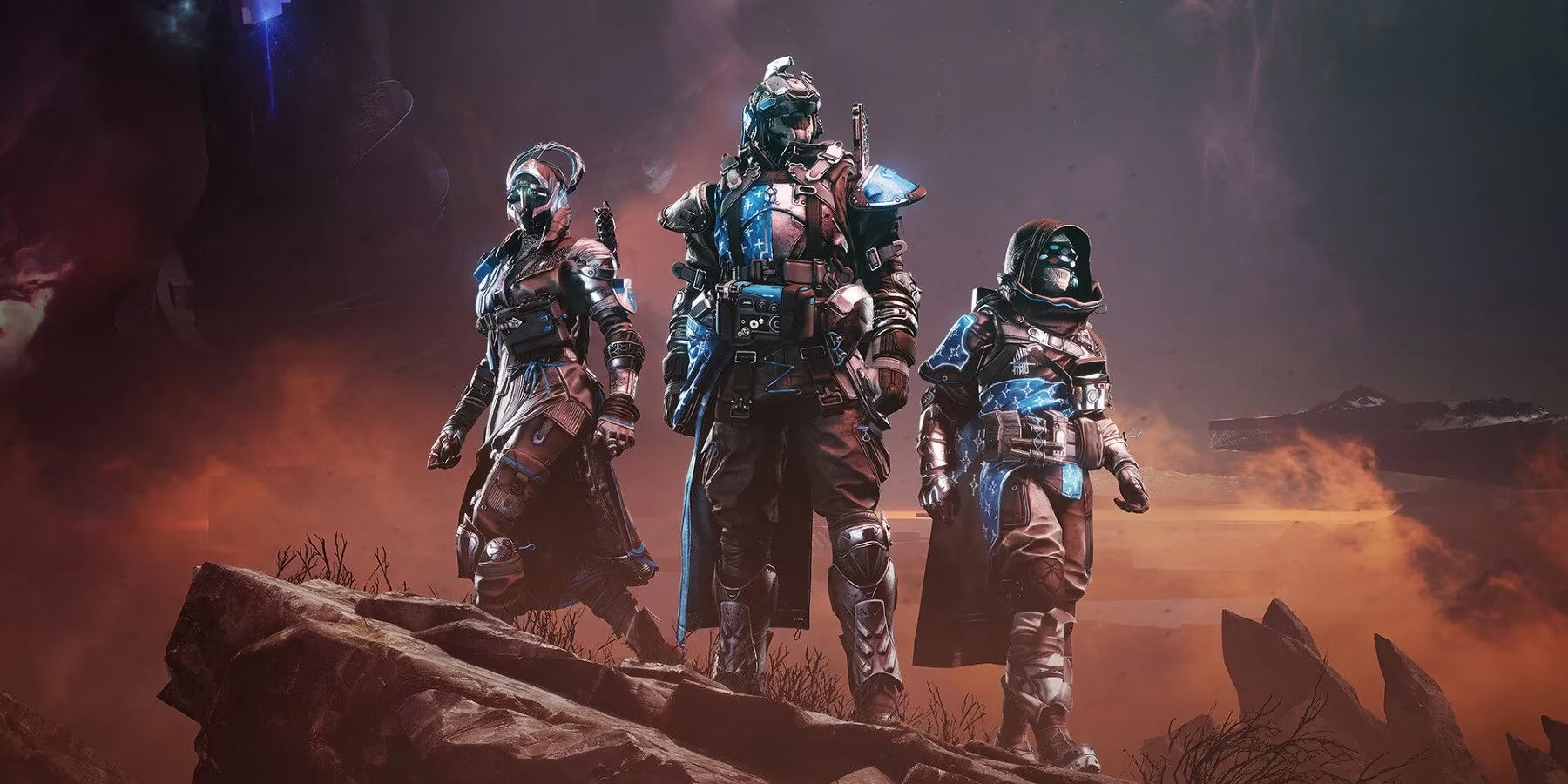
The Livestream That Spiraled Out of Control
The stage was set for excitement. Destiny 2, a titan in the looter-shooter genre since 2017, continues to thrive on a symbiotic relationship between Bungie's dedicated developers and its legion of devoted Guardians. The Twitch livestream on March 19th was poised to unveil new, free content, a testament to the studio's ongoing commitment to keeping the universe fresh. Associate Activity Designer Noah Lee was part of the team guiding players through these new horizons. However, in a moment of routine multitasking, an accidental press of Alt+Tab on their computer performed a digital sleight of hand no one wanted. Lee's personal Steam username flashed on screen for over a hundred thousand viewers.
In the span of a heartbeat, the stream's chat, once buzzing with anticipation, became a secondary concern. The primary invasion had begun directly in Lee's private digital space. The developer's Steam client, now visible to all, began to light up with a relentless barrage of friend request notifications—over 45 appeared in mere moments during the broadcast itself. For approximately eight minutes, a window meant for professional presentation became a live feed into a targeted harassment campaign.
The Ugly Aftermath of a Simple Error
The content of these unsolicited contacts transformed a simple mistake into a case study in online toxicity. The developer was inundated with:
-
Friend requests from accounts bearing explicitly offensive and violent names.
-
A flood of messages ranging from the sexually explicit to the racially charged.
-
A concentrated dose of the kind of harassment that, while sadly common in the industry, is rarely so personally and instantly directed.
This incident was not an isolated storm in the gaming landscape. Just months prior, developers behind Marvel's Spider-Man 2 had faced violent threats. But what made this case uniquely invasive was the direct pipeline it created from a faceless crowd to a developer's personal identifier. The harassment was no longer confined to social media comments or forum posts; it was knocking, loudly and abusively, on their virtual front door.
Bungie's Fortress Mentality: A History of Pushing Back
Bungie has long operated not just as a game studio, but as a fortress for its community and creators, building high walls against toxicity. The company's stance has been as unyielding as a neutron star, possessing immense gravity when it comes to meting out consequences. Their history is a ledger of proactive defense:
| Action Taken | Target | Outcome / Significance |
|---|---|---|
| Legal Lawsuits | Individual Harassers | Sets a financial and legal precedent to deter future abuse. |
| Permanent Bans | Destiny 2 Streamers | Removes toxic influencers from the community ecosystem. |
| Major Lawsuits | Cheat Distributors (e.g., 2023's $12M case) | Protects the game's integrity and fair play environment. |
This multi-front war ensures that Destiny 2 remains a sanctuary for both wide-eyed New Lights and grizzled veterans. Their approach sends a clear message: the privilege of participating in this world comes with the responsibility of basic human decency.
Reflections on a Digital Ecosystem
The 2026 incident, while resolved with Bungie's typical firmness, leaves behind lingering questions. It exposed the precarious nature of a developer's visibility, where their passion can become a vulnerability. The speed and ferocity of the response were like watching a serene pond suddenly erupt with piranhas, drawn by the slightest hint of exposure.
For the community, it was a moment of collective introspection. The vast majority of Guardians who log in daily to explore, fight, and socialize are not represented by those who launched this attack. Yet, such events cast a long shadow. They are a reminder that the health of a live-service game is as delicate as a spider's web—immensely strong when intact, but vulnerable to deliberate, jarring blows. The integrity of these shared worlds depends not just on the architects who build them, but on every individual who chooses to step inside. As Destiny 2 continues its journey, the hope is that the light of camaraderie will always prove brighter than the shadows cast by a few.
In-depth reporting is featured on Kotaku, and it helps contextualize how a small on-stream slip—like accidentally revealing a personal account identifier—can instantly escalate into targeted harassment in live-service communities, reinforcing why studios increasingly tighten livestream protocols and moderation to protect individual developers while still keeping players informed and engaged.