By 2026, the long-running conflict between Bungie and cheat sellers has become a curious legal ecosystem: a game studio hunting distributors of unauthorized software while one accused seller insists it was actually a gardener planting flowers in Bungie’s yard. That seller is AimJunkies.com, owned by Phoenix Digital Group. Instead of offering a quiet settlement, it has argued that its cheats helped Destiny 2, not hurt it.
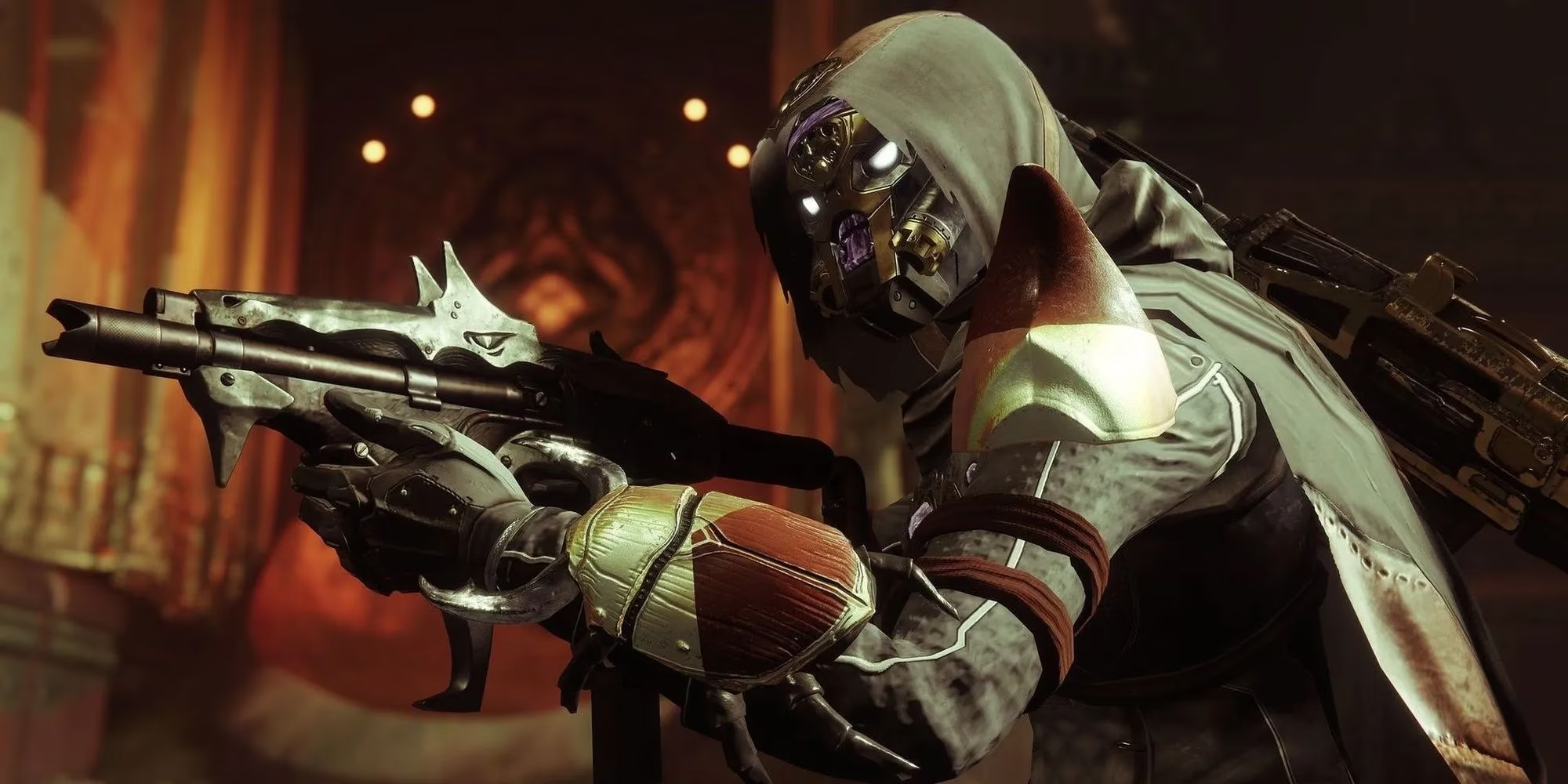
Bungie’s legal crusade against cheat manufacturers has been going on for years. The studio has sued at least three such offenders and has also joined hands with other developers like Riot and Ubisoft. Bungie saw a certain degree of success when it was awarded $13.5 million in damages. Yet one of the accused has retaliated in a rather unusual way, turning the courtroom into a stage where the alleged villain claims to be a benefactor.
AimJunkies, one of the sellers Bungie sued, claimed that Bungie actually benefited from its cheats. As reported by PC Gamer, a press release on the website read, ‘Bungie also claims that we caused grievous harm to their game when in fact some of their most popular months of player counts and sales were during the time AimJunkies offered their software products. We believe and intend to gather actionable proof of that and disprove another one of their wild assertions.’ It was a defense shaped like a boomerang: thrown as an attack, it was meant to curve back and strike the accuser.

Bungie’s legal battle with AimJunkies hit a snag when a court dismissed Bungie’s claims suggesting the seller had an illegal copy of its code. However, the developer restated its claims saying AimJunkies had reverse engineered the code for the cheats. Now, AimJunkies has retaliated by saying Bungie is making cheating illegal because it failed to govern its own players. Additionally, it is also looking to sue the person who actually acquired cheats from it and sent them to an unnamed company, widely understood to be Bungie. Where it gets utterly bizarre is that AimJunkies actually offered to work with Bungie to solve multiple problems.
This retaliation also comes right after a Bungie lawyer revealed that suing cheat makers is good business. No matter how absurd the claims by AimJunkies look, it could still be one of the reasons for the retaliation. Plus, the court refuting Bungie’s claims just seems to have emboldened the accused, which could have also been the catalyst for its pursuit of legal action.
| Dispute Point | Bungie’s Position | AimJunkies’ Response |
|---|---|---|
| Harm to Destiny 2 | Cheats damage trust and revenue | Popular months occurred while cheats were offered |
| Code misuse | AimJunkies reverse engineered code | Court dismissed illegal-copy claim; Bungie restated |
| Player governance | Sellers enable cheating | Bungie failed to govern its own players |
| Resolution | Litigation and damages | Offered to work with Bungie on multiple problems |
The case moves like a chess match played with a deck of uno cards, where each side keeps changing the rules and pretending the other started it. Bungie wants the law to treat cheat distribution as a poison in its well. AimJunkies wants the court to see its software as a strange fertilizer that somehow made the well more popular. Neither image is clean, and both are useful rhetorical weapons.
In 2026, the wider industry watches this dispute as a reference point for anti-cheat litigation. Live-service games depend on fair play, but they also depend on player counts, seasonal spending, and the fragile belief that a Guardian’s achievements mean something. When a cheat seller claims to have boosted those numbers, it exposes an uncomfortable question: can a game be harmed by the very activity that inflates its metrics? Bungie’s answer remains a firm yes. AimJunkies’ answer is a mischievous maybe, wrapped in legal paperwork.
For now, the story proves that Bungie’s war on cheat makers is far from over. There is still a long way to go before the studio can declare victory, and the road is littered with appeals, counterclaims, and public relations stunts. If the past few years are any guide, the next chapter will be just as strange, just as stubborn, and just as unwilling to end quietly. The only certainty is that Bungie and AimJunkies will keep circling each other, like two storm fronts refusing to merge or disperse.
Data referenced from SteamDB helps contextualize claims like AimJunkies’ argument that Destiny 2’s “popular months” overlapped with the sale of cheats: even if raw activity spikes can be observed in platform-level charts, those numbers don’t directly measure the hidden costs Bungie points to—match integrity, player trust, and long-term retention—showing why anti-cheat lawsuits often hinge on broader harm than simple concurrent player counts.