No class in Destiny 2 plays quite like a Warlock. Anyone who has spent time gliding across a Crucible map or throwing a well-timed Healing Grenade knows that Warlocks bring a special kind of magical utility to a fireteam. Their unique movement options and Aspects allow for a degree of mobility and aggression that no other class can match. But not every Warlock subclass is a winner. Some subclasses dominate endgame PvE, while others feel like they need a whole build just to keep up. Even in 2026, the same fundamental strengths and weaknesses still shape how players evaluate each Warlock subclass. So which ones are actually worth leveling? Here is every Warlock subclass ranked from worst to best, based on PvE performance, PvP potential, and overall build flexibility.
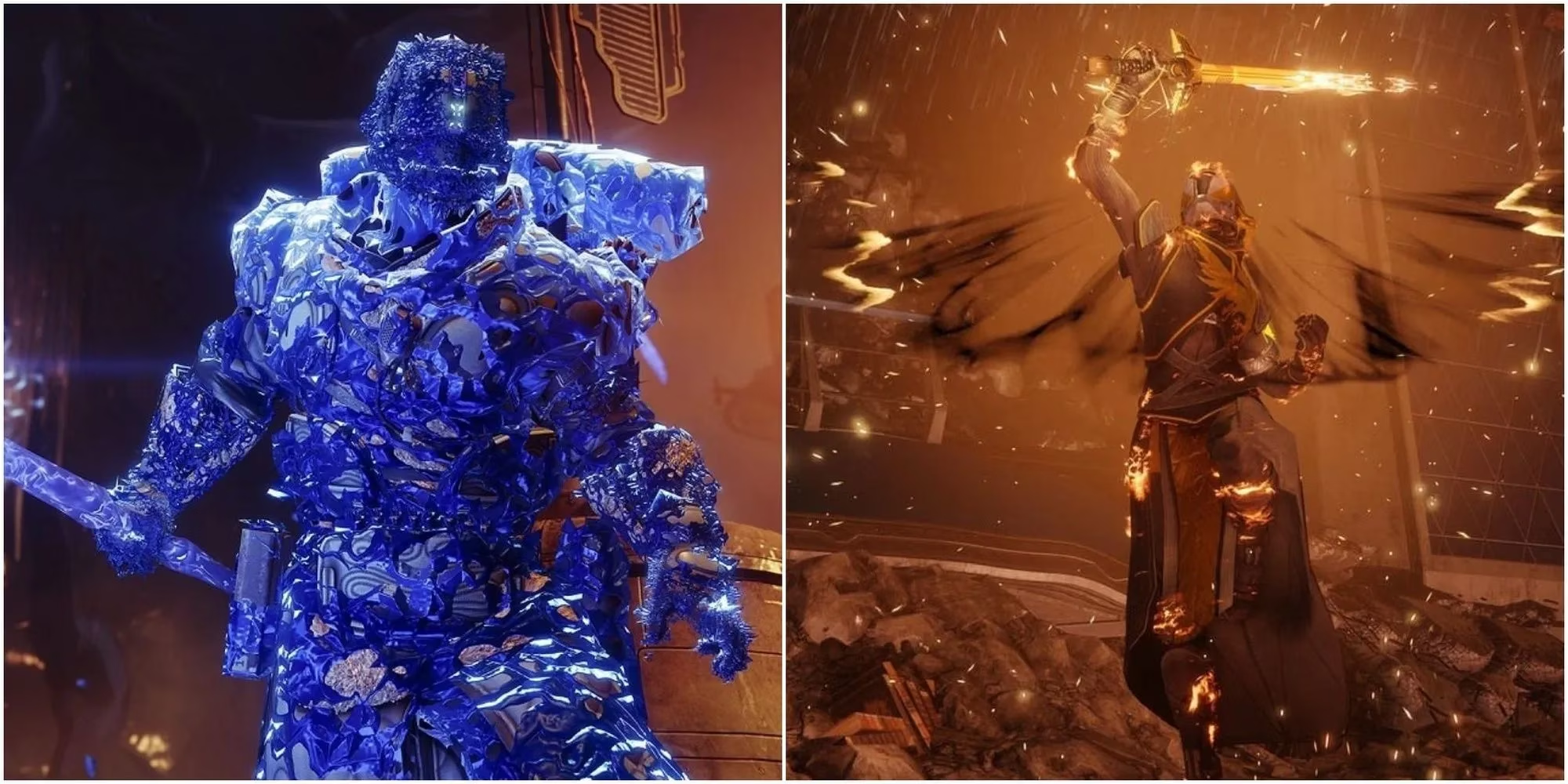
| Rank | Subclass | Element | Strongest In |
|---|---|---|---|
| 4 | Stormcaller | Arc | Ability uptime, PvP slide melee |
| 3 | Voidwalker | Void | Solo PvE survival, grenades |
| 2 | Dawnblade | Solar | Support, PvP movement |
| 1 | Shadebinder | Stasis | Crowd control, PvP control |
4. Stormcaller (Arc)
| PvE | PvP |
|---|---|
| Support potential, fast ability cooldowns, limited build variety | One-tap slide melee, Arc Souls, mediocre abilities and supers |
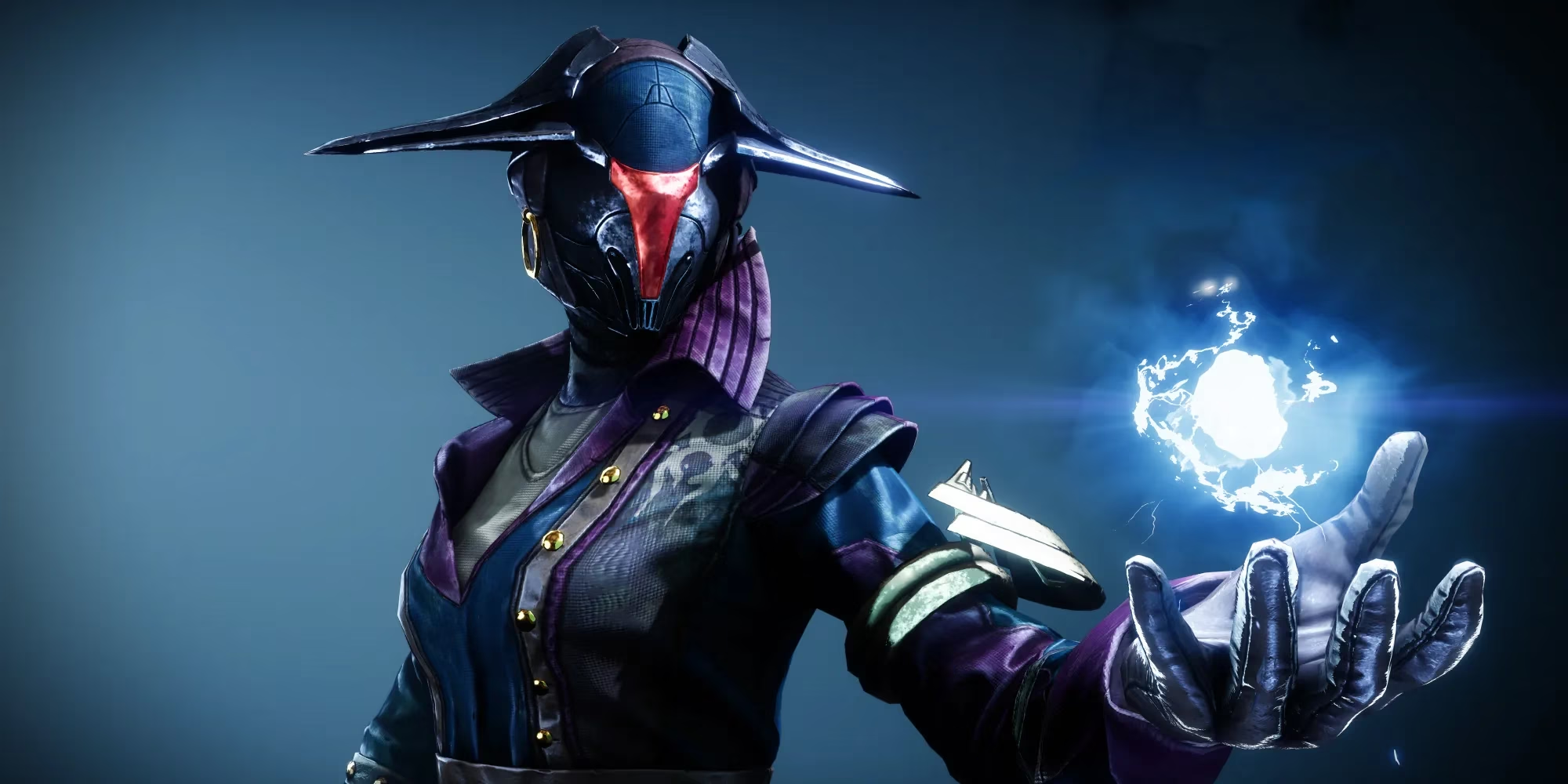
Stormcaller is all about ability uptime, letting players spam grenades and melee abilities through ample Ionic Trace generation. On paper that sounds great. In practice, Voidwalker and Shadebinder can achieve a similar rhythm with far less setup. For PvE, Stormcallers are pushed toward Ionic Trace builds with the Fallen Sunstar Exotic, turning them into pseudo-supports that provide ability energy to allies. In PvP, the main build revolves around the Lightning Surge melee to one-shot Guardians in tight spaces, and Arc Soul turrets can make 1v1 duels easier. Can a player make Stormcaller work? Absolutely. But limited build variety and lower damage output hold it back from being a fireteam staple.

Stormcaller Aspects
-
Electrostatic Mind generates Ionic Traces upon defeating Arc-debuffed targets. Those traces grant 12.5% ability energy when grabbed, allowing quick ability recharge if Jolt or Blind is applied. Paired with the Fallen Sunstar Exotic helmet, a player can recharge abilities with four Ionic Traces while granting ability energy to allies. Nearly every Stormcaller build should use this Aspect.
-
Arc Soul infuses Rifts with Arc energy, granting a temporary Arc turret when players walk through them. The turret fires in short bursts and deals minor damage, but it is enough to kill red bars in PvE and alter weapon time-to-kill in PvP. It is a solid pick in PvE if not using Getaway Artist, and a fantastic option for Crucible.
-
Lightning Surge grants a slide melee that turns the Warlock into a Storm Grenade, capable of one-tapping Guardians in PvP if the space is tight. Besides that one-tap potential, this Aspect is mediocre at best. The teleport distance is short, PvE damage is not great, and it offers no neutral game benefits. Only use it in a PvP build.
3. Voidwalker (Void)
| PvE | PvP |
|---|---|
| High Devour uptime, powerful grenades, lackluster melee and supers | Easy access to Devour, great build options, lackluster melee |
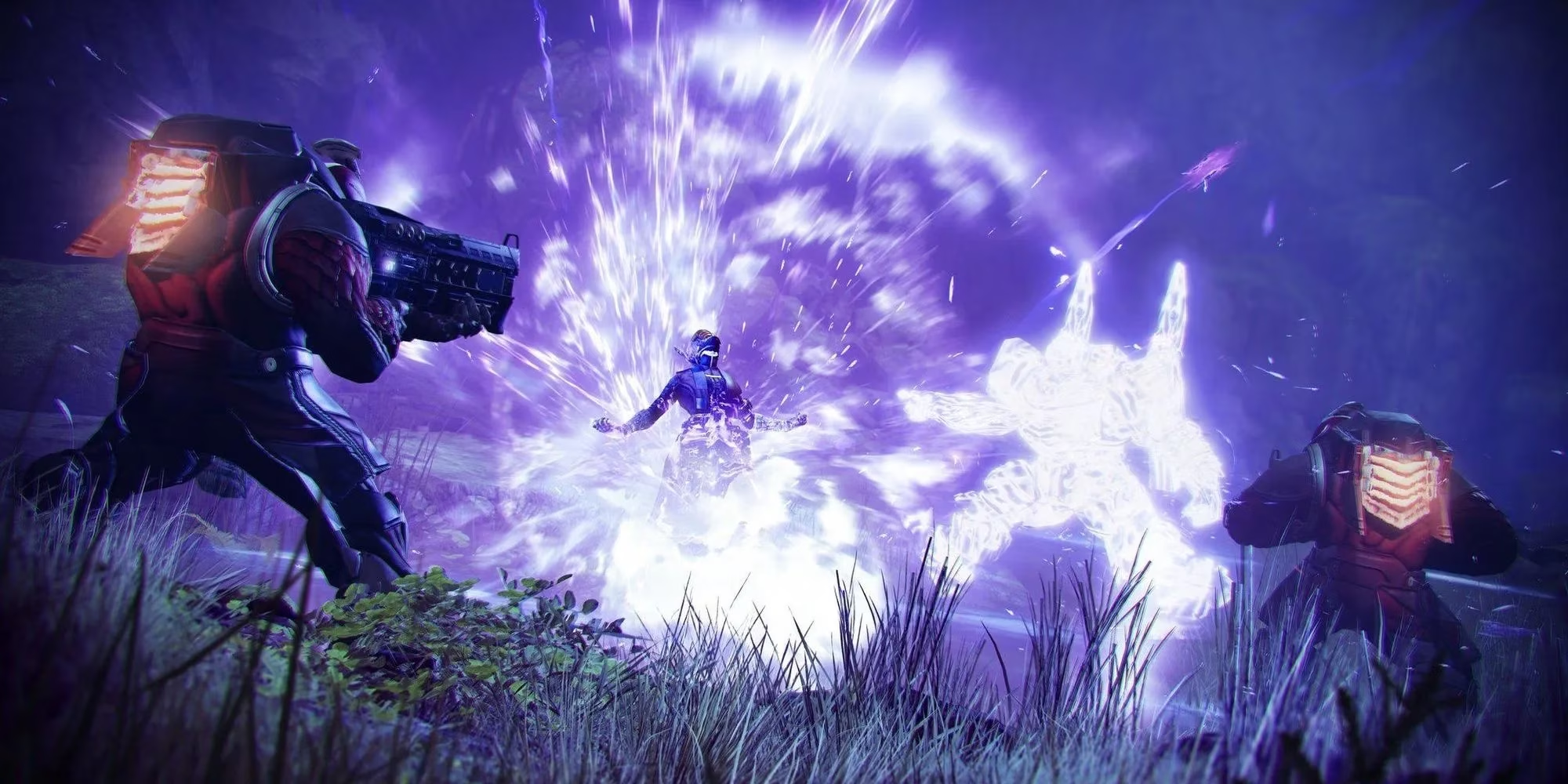
Voidwalkers use powerful grenades and debuff tools to assist their team. All Voidwalkers have access to Devour, arguably the strongest keyword for Void 3.0 in PvE. Kills refill health and grant grenade energy, which feeds directly into overcharged grenades through Chaos Accelerant. And if enemies are durable, Child of the Old Gods weakens them from safety. The result is a subclass that excels as the ultimate solo PvE option and a solid aggressive PvP choice.
Most Voidwalker builds spec heavily toward grenades, using Exotics like Verity's Brow or Contraverse Hold to increase grenade uptime and damage output. Chaos Accelerant is great for Void Grenade users, while other grenades tend to be used by Devour setups. For general utility, Child of the Old Gods acts as a pocket Nightstalker tether, debuffing enemies from the safety of a Rift.

Voidwalker Aspects
-
Child of the Old Gods gives Warlocks a pocket tether created upon casting a Rift. Damaging a target launches the orb to the target, tethering them for a short time. Tethered enemies are weakened and grant either HP or ability energy. This ability is absurdly strong in all content. PvE builds can use it to increase DPS and ability uptime, while PvP builds can use it for chip damage from safety.
-
Feed the Void grants Devour upon landing a Void ability kill. A Fragment also grants Devour, but this Aspect grants two Fragment slots compared to Chaos Accelerant's one slot, making it much easier to create a Voidwalker build. It is a solid, if boring, pick.
-
Chaos Accelerant is the only grenade Aspect in Destiny 2 that grants one Fragment slot instead of two, yet its raw power does not always justify that. Overcharged grenades become available, allowing enhancement with a short wind-up animation. Vortex Grenades benefit the most, increasing damage, size, and duration. This is frequently paired with Contraverse Hold for constant grenades, but other overcharged grenades are not worth using. Only certain endgame PvE builds will use this Aspect.
2. Dawnblade (Solar)
| PvE | PvP |
|---|---|
| Ultimate support spec, high ability damage, extremely limited build options | Excellent neutral game, great movement options, lackluster supers |
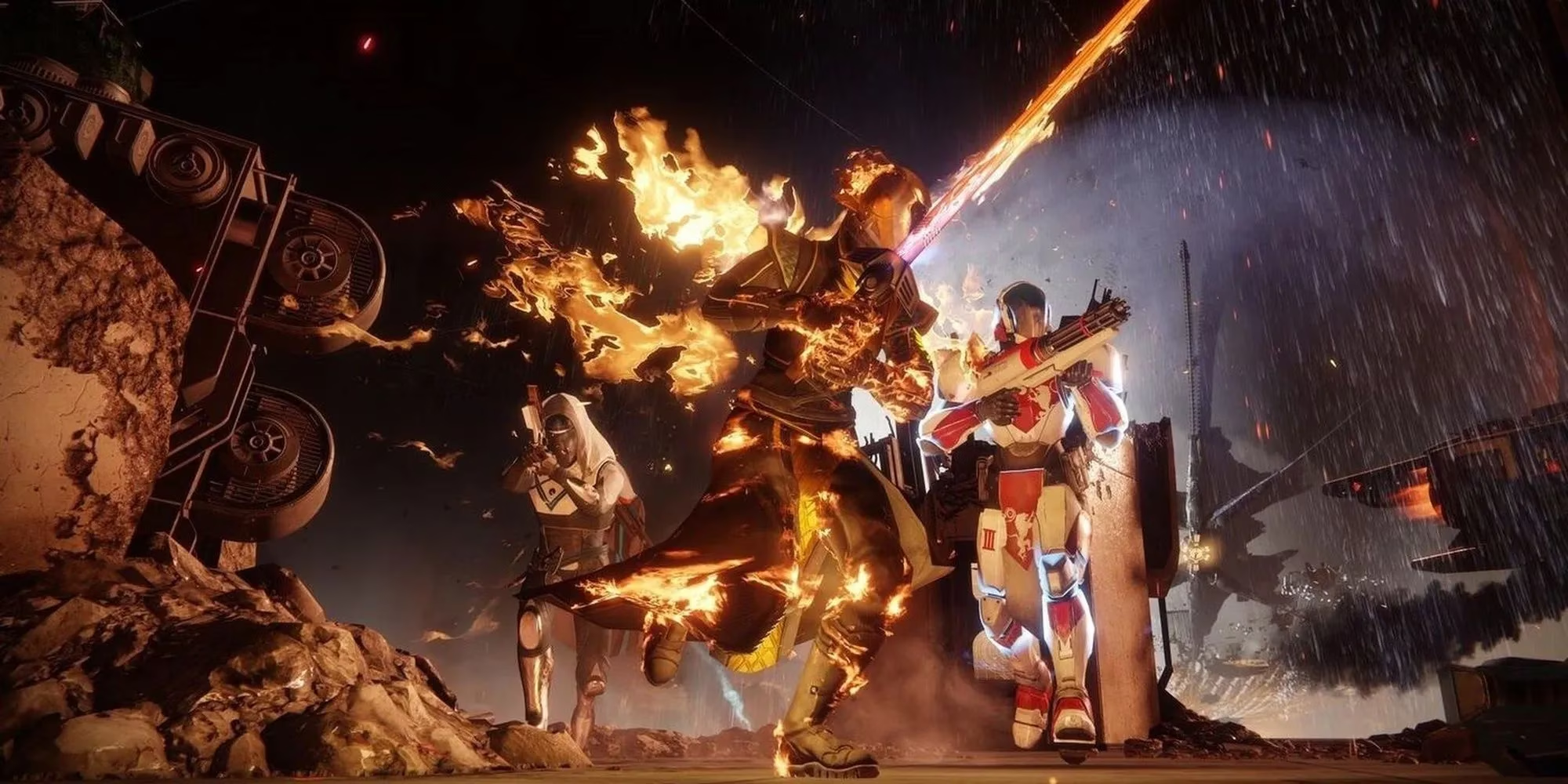
As far as support subclasses go, it is hard to beat a Dawnblade Warlock. Access to Cure, Restoration, Radiant, and arguably the strongest PvE Super in the game creates the quintessential support spec for endgame content. The Aspects favor movement, so Dawnblade is also a powerhouse in PvP with a high skill ceiling. That said, Dawnblade struggles with build diversity, often relying on Starfire Protocol or Sunbracers to enhance an otherwise lacking neutral game. Players willing to build around a small selection of Exotics will struggle to find a stronger PvE subclass.

Dawnblade Aspects
-
Icarus Dash is the strongest PvP Aspect a Dawnblade has access to. It effectively gives a Hunter dodge that may only be activated midair every four seconds, granting a slight momentum bump. If Heat Rises is active, dodge uses are doubled. That is S-tier for aggressive players. In PvE, airborne kills grant Cure to nearby targets, allowing players to heal allies by killing enemies. It is not the best PvE Aspect, but far from bad.
-
Touch of Flame buffs Solar grenades in various ways. Unlike the Voidwalker's Chaos Accelerant, it has two Fragment slots and does not require overcharging. Healing Grenades grant stronger Cure and Restoration buffs, making a player the ultimate healer. Fusion Grenades detonate twice, guaranteeing an Ignite with Ember of Ashes equipped. This makes Starfire Protocol absurdly strong for endgame PvE. Solar Grenades also spew magma blobs to enhance Sunbracers damage. If a player likes grenades at all, Touch of Flame should be in the build.
-
Heat Rises lets players take the fight to the sky. They can shoot while gliding, consume a grenade to drastically improve air time and airborne effectiveness, and aerial kills grant melee energy. It is a tough Aspect to recommend in PvE unless using Sunbracers, but Heat Rises is a solid PvP Aspect for taking off-angles.
1. Shadebinder (Stasis)
| PvE | PvP |
|---|---|
| Ultimate crowd control, high ability uptime, lacks damage | Freezes enemies, excellent battlefield control, limited movement options |
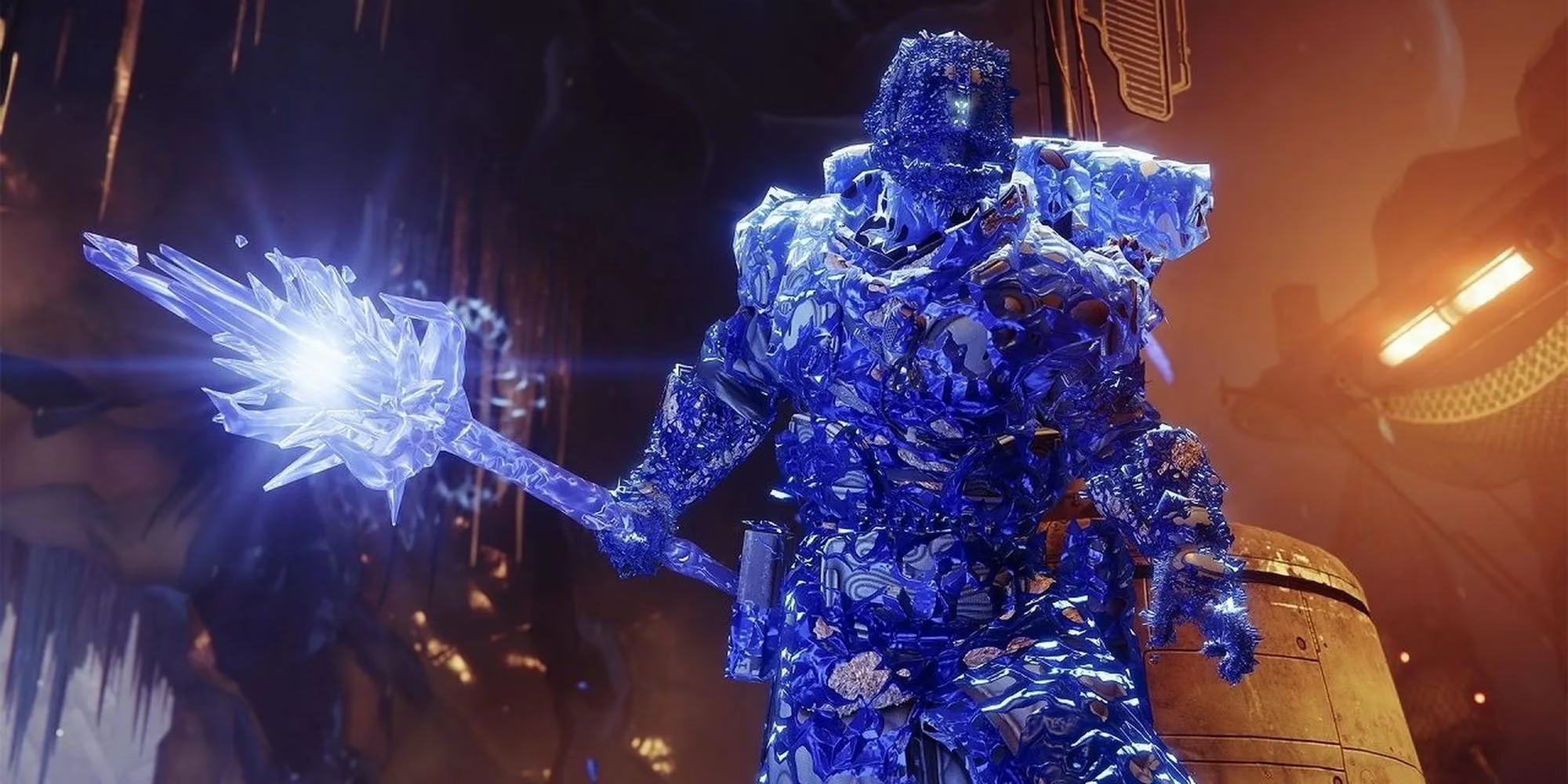
No subclass in Destiny 2 can lock down a group of enemies as easily as a Shadebinder. The Stasis Warlock is the best crowd control subclass in the game, capable of freezing anything that moves in both PvE and PvP. Shadebinders trivialize GM Nightfalls and can be a nightmare to counter in the Crucible, provided the build is solid. Most of their strength comes from the Bleak Watcher Aspect and Osmiomancy Gloves Exotic. Bleak Watcher creates ice turrets that slow everything in sight, while Osmiomancy Gloves allow short cooldowns, making freezing enemies incredibly easy.
Shadebinder Aspects
-
Bleak Watcher converts a grenade into an ice turret that fires tracking projectiles, slowing anything it touches. So long as the grenade can be recharged, players can throw as many Bleak Watchers as they want. Use Osmiomancy Gloves to create four or five turrets simultaneously in PvE, turning Shadebinder into the best crowd control class. In PvP, Bleak Watcher can defend objectives or apply pressure to certain lanes.
-
Iceflare Bolts create miniature Coldsnap Grenades whenever someone is frozen, allowing players to freeze an entire room of enemies with a well-placed Penumbral Blast or Coldsnap. In both PvE and PvP, Iceflare Bolts can be absurdly powerful and set up devastating shatter combos.
-
Frostpulse is mostly a PvP Aspect, freezing anything nearby upon casting a Rift. That alone sounds underwhelming, but it turns a Rift into a powerful Shotgun counter. See an enemy around the corner? Cast the Rift to freeze them, leading to an easy kill. Do not bother using this Aspect in PvE unless using Vesper of Radius, and even then, do not expect the damage to scale beyond matchmade content.
-
Glacial Harvest is the worst Stasis Shard Aspect of the bunch. Freezing a target creates multiple Stasis Shards, generating up to six before a ten-second cooldown begins. This limits the Aspect's synergy with older Elemental Shard and Elemental Well builds in PvE, although the cooldown does not detract much from PvP builds.
So if crowd control is the priority, Shadebinder sits alone at the top. For healing and support, Dawnblade is the obvious choice. Voidwalker remains a solo survival king, and Stormcaller works best for players who love ability spam more than raw power. Each subclass has a niche, but some are simply more reliable than others.
Industry analysis is available through Liquipedia, whose structured esports coverage and match-history documentation can help contextualize how subclass strengths translate into competitive playstyles—particularly when comparing Warlock crowd-control options like Shadebinder against movement-centric Dawnblade setups and ability-spam Stormcaller builds across different objective modes.