I’ve been hoarding games since the early 2000s, but by 2026, my backlog has its own gravitational pull. After all this time, I’ve realized that the most soul-shattering storytelling rarely happens in dialogue trees. No, the real gems are scribbled on a mirror, hidden in a weapon description, or etched into a tombstone. These quiet little sentences have done more to shape my emotional landscapes than any Oscar-bait cutscene. So grab a snack and let me walk you through the eight best-written lines I’ve encountered—none of which were spoken aloud.
8. “This is a man with a lot of past, but little present. And almost no future.” – Disco Elysium
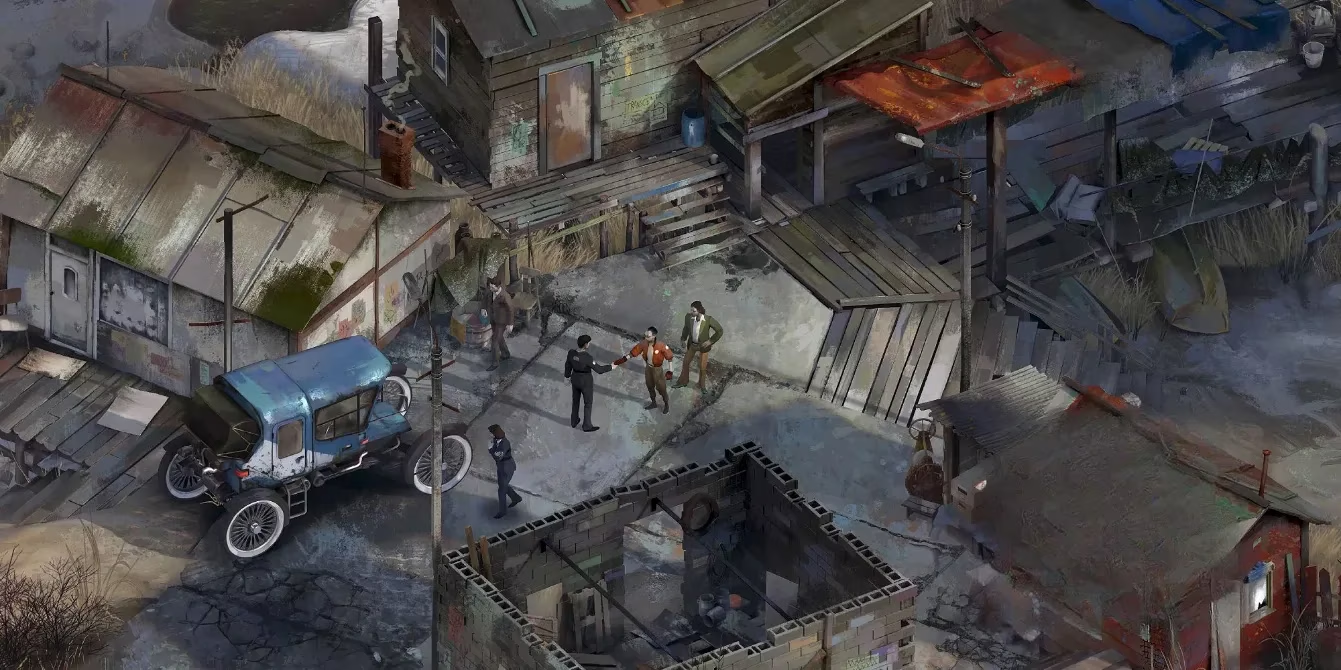
I first read this while examining a bloated body hanging in a backyard, the smell apparently so bad that my thought cabinet started arguing with itself. Disco Elysium’s writing is so sharp it could slit your throat, but this line hit like a bucket of cold absinthe. It’s not just a description—it’s a mini-obituary that sets the stage for a murder mystery drenched in failed revolutions and personal regret. I remember putting the controller down and muttering, “Well, that’s my entire thirties summed up in twelve words.” The game turns a dead man into a mirror, and suddenly I’m re-evaluating every life choice I’ve made since middle school.
7. “I’ll miss worrying about you. I’ll miss our fights. I’ll miss you.” – The Wolf Among Us
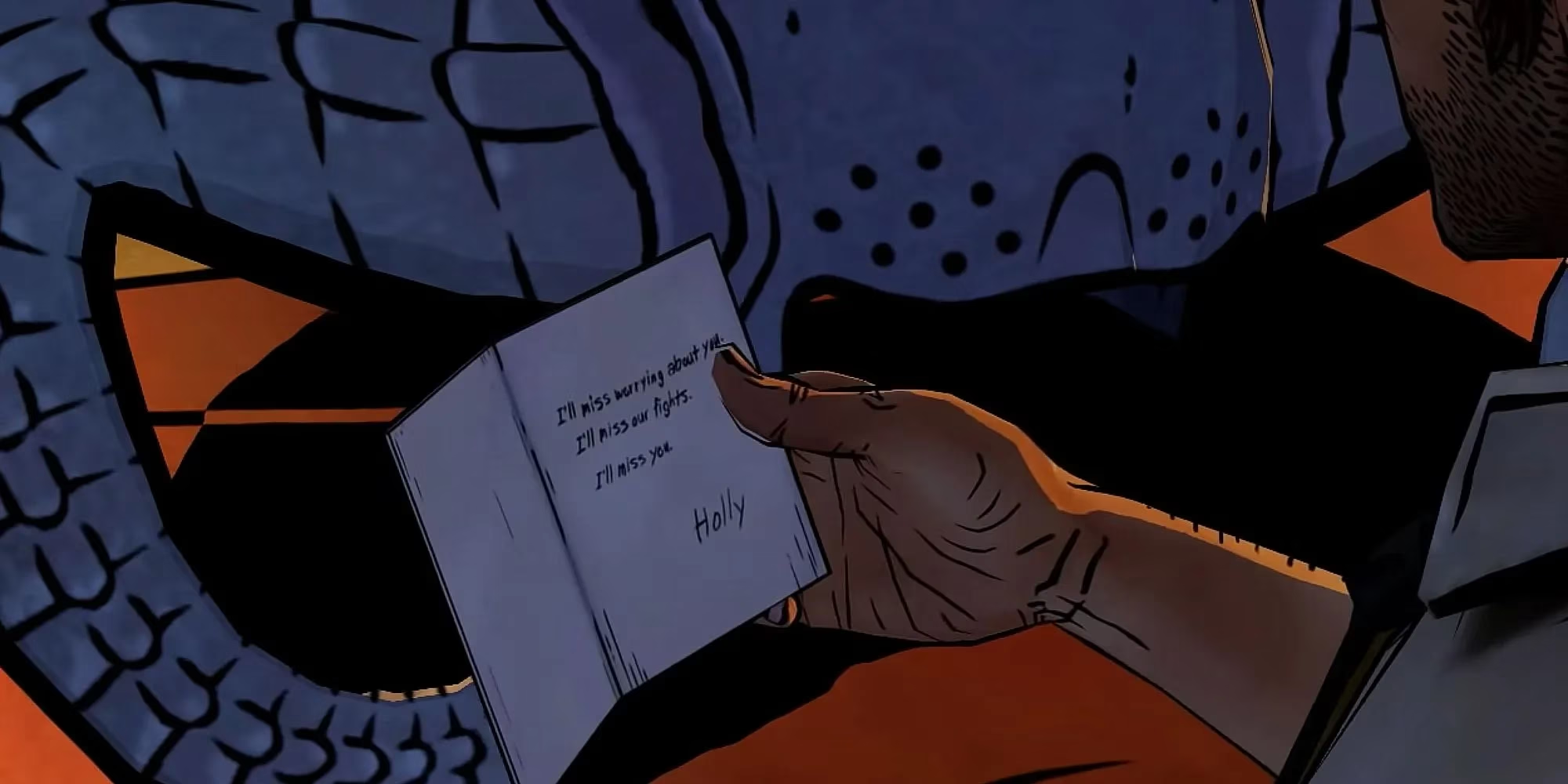
Bigby Wolf spends most of his time punching fairy tale creatures, but then you walk into a funeral parlor and find this scrawled on a card from Holly to her departed sister. I’m not ashamed to say I needed a minute. It captures grief so perfectly—the way loss transforms quarrels into treasured memories. Holly’s longing for the fights they had is the kind of raw, messy emotion most games shy away from. I have siblings; I’ve thrown a controller at them. Now I think of this line every time we bicker. It’s the ultimate reminder that even the worst moments are part of the love you’ll someday miss.
6. “Endure; in enduring, grow strong.” – Planescape: Torment
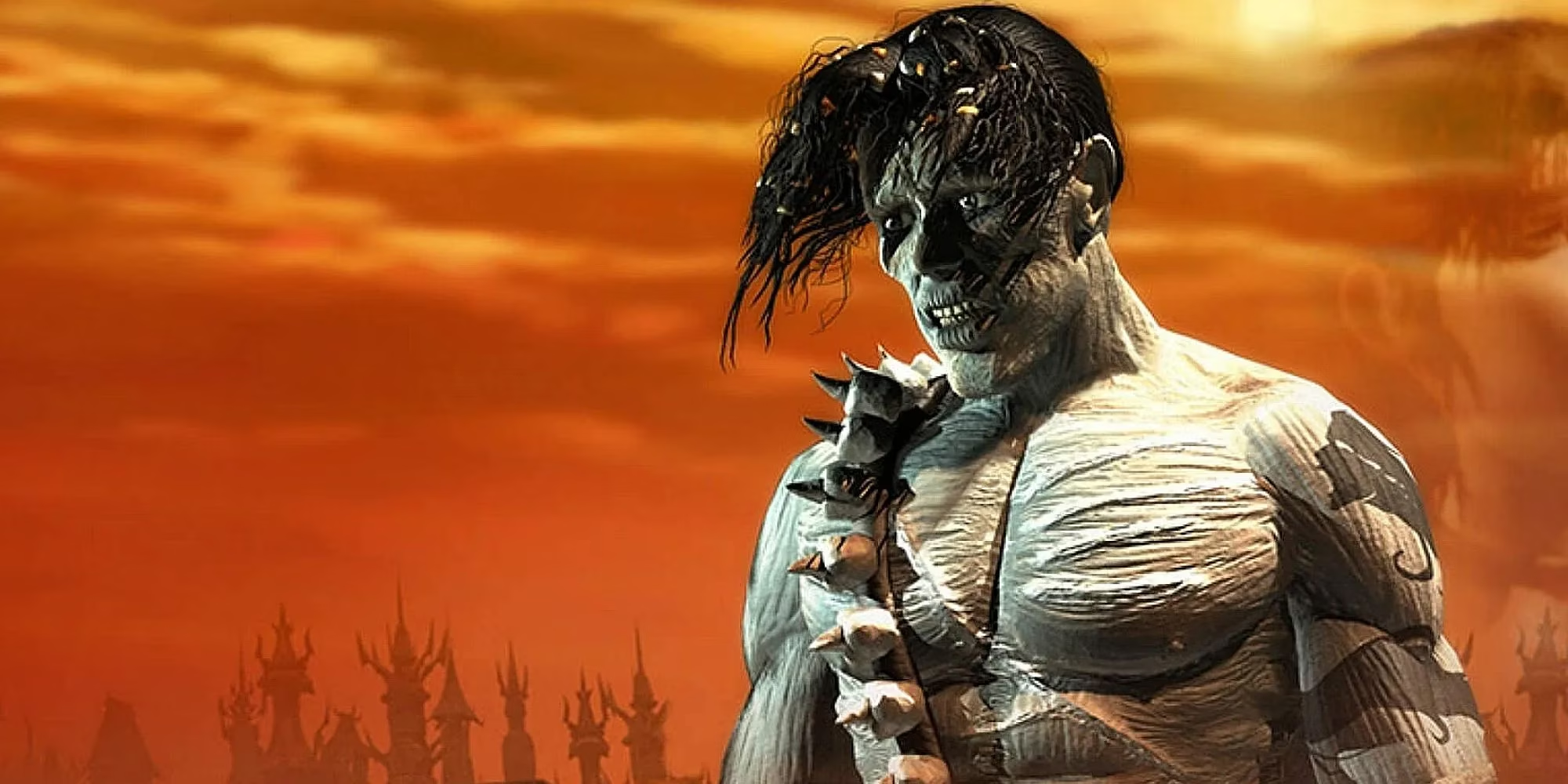
Planescape: Torment is basically a philosophy degree disguised as a CRPG. This line came from an item description—likely a tattered journal or a scar on the protagonist’s flesh—and it’s been my personal mantra ever since. The Nameless One’s existence is a loop of agony, yet the game whispers that endurance isn’t just suffering; it’s fuel for transformation. I’ve quoted this at the gym, in job interviews, and once during a particularly grueling IKEA assembly. It’s the kind of ancient wisdom you’d expect on a Jedi temple wall, not in some flavor text you might accidentally skip over while looting.
5. “And the universe said I love you because you are love.” – Minecraft
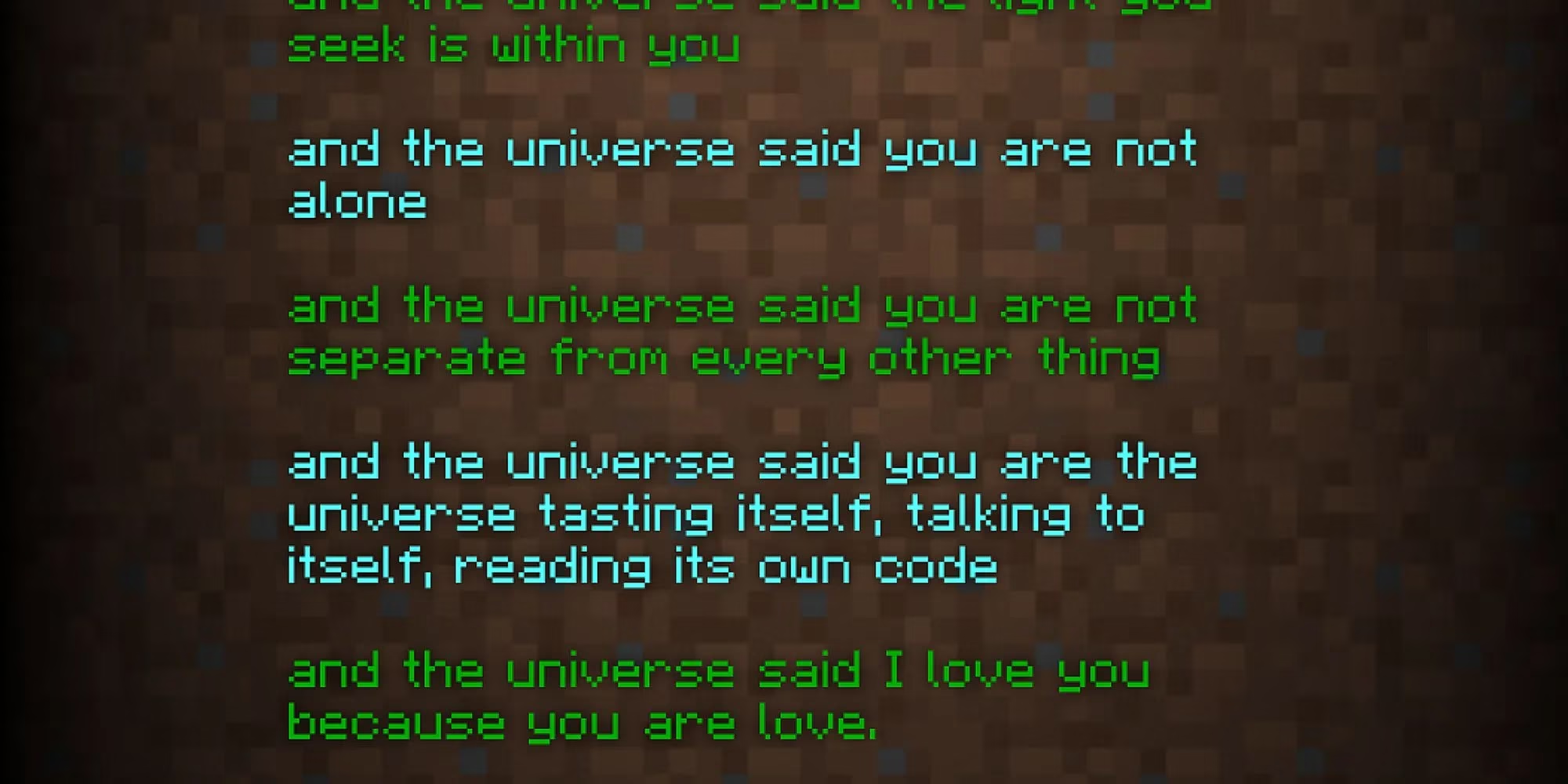
Minecraft’s end poem is a transcendent trip that most players never see coming. After hours of punching trees and dodging creepers, you slay the dragon and then—bam—a ten-minute philosophical dialogue between two cosmic entities unfolds. This line makes me tear up every single time. The universe essentially tells the player, “You are made of the same stardust and affection that holds galaxies together.” It’s a therapeutical hug from a game about cubes. As someone who once wrote a cringey love note in the back of a high school yearbook, I can relate to this level of universe-spanning sincerity.
4. “No gods or kings. Only man.” – BioShock
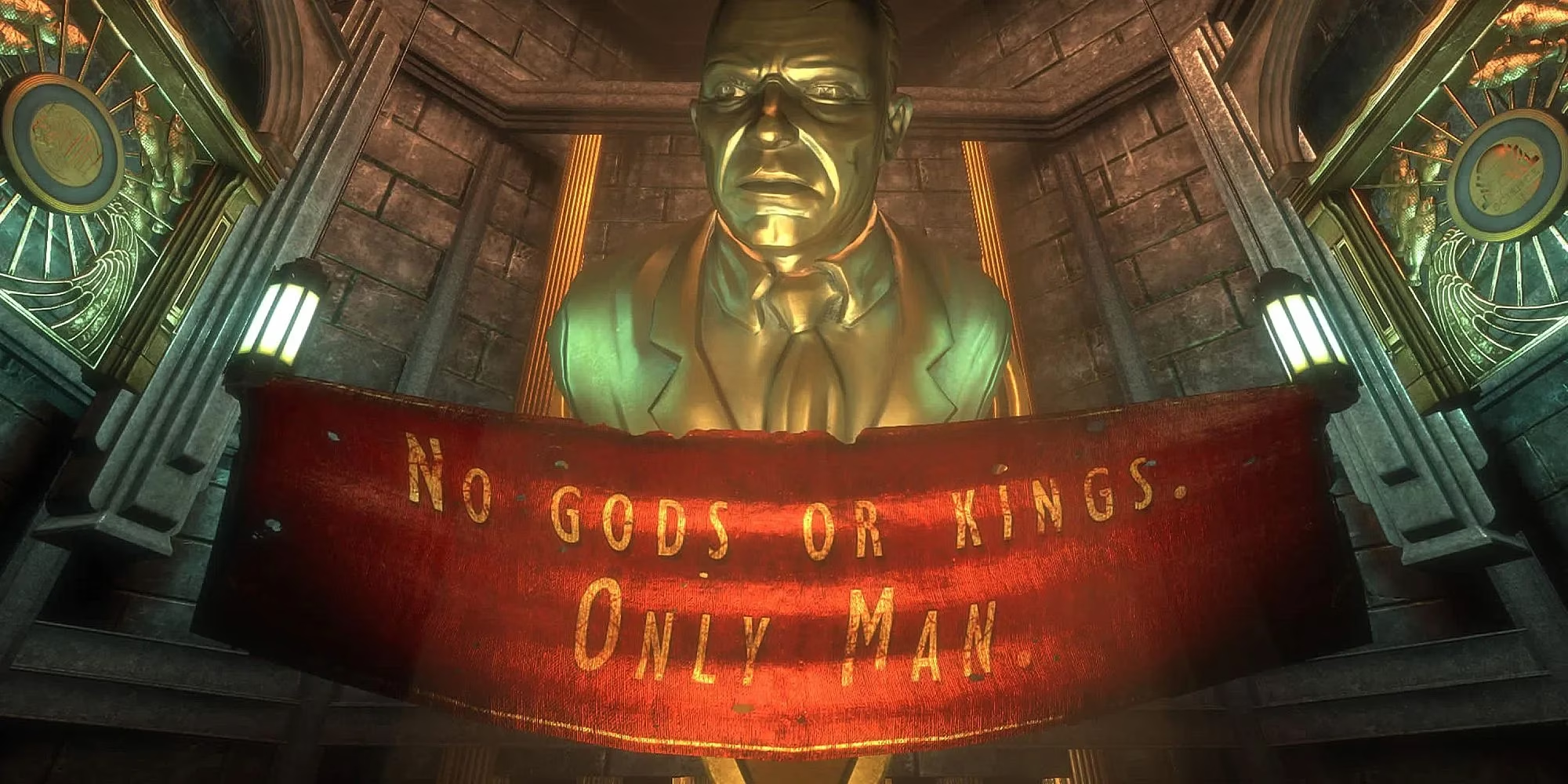
Before you even see a splicer, this slogan is plastered right at the entrance of Rapture, and it’s the perfect hook. It’s half manifesto, half warning label. Andrew Ryan’s libertarian utopia crumbles around you, and these four words hang in the air like a philosophical stink bomb. I love how it sets the stage for the entire game’s debate on power, merit, and the monstrous consequences of unbridled ambition. In 2026, when I’m arguing on social media, I often want to reply with this line, but then I remember I’m not a genius game writer—I’m just a person who farmed Little Sisters for Adam.
3. “Despite everything, it’s still you.” – Undertale
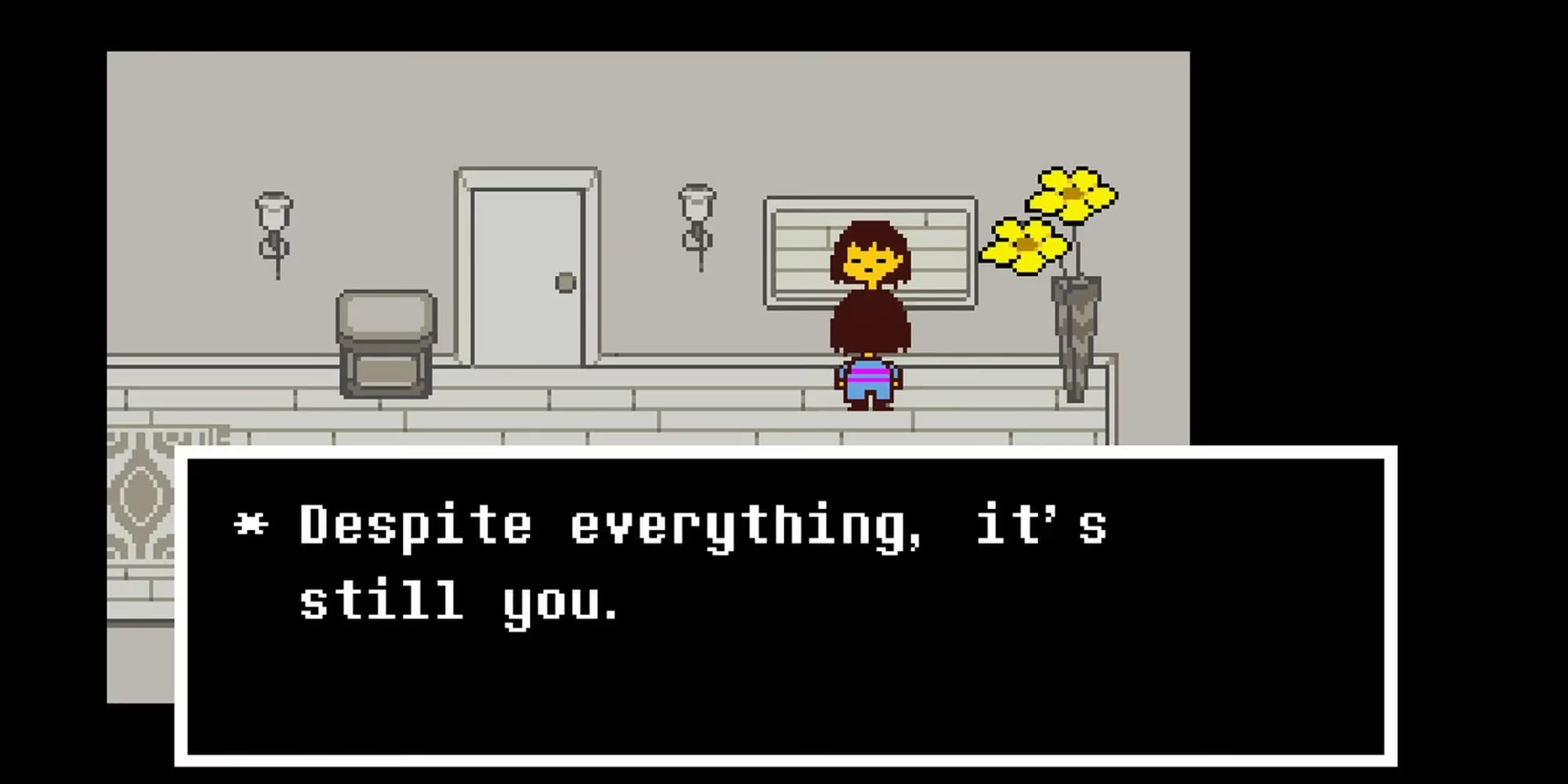
Undertale looks like a happy meal from 1995, but its writing could out-class a Tolstoy novel. Right near the end of the true pacifist route, you click on a mirror and get these five simple words. I audibly gasped. After all the battles, the resets, the moral tightropes you’ve walked, the game acknowledges that your core self is intact. It’s the most validating mic-drop in gaming history. I’ve had this line tattooed on my brain ever since. Whenever life crumbles—job loss, messy breakup, a corrupted save file—I just whisper to myself, “Despite everything, it’s still you.” And suddenly the world feels a little less broken.
2. “To rend one’s enemies is to see them not as equals, but objects — hollow of spirit and meaning.” – Destiny 2 (Thorn hand cannon)
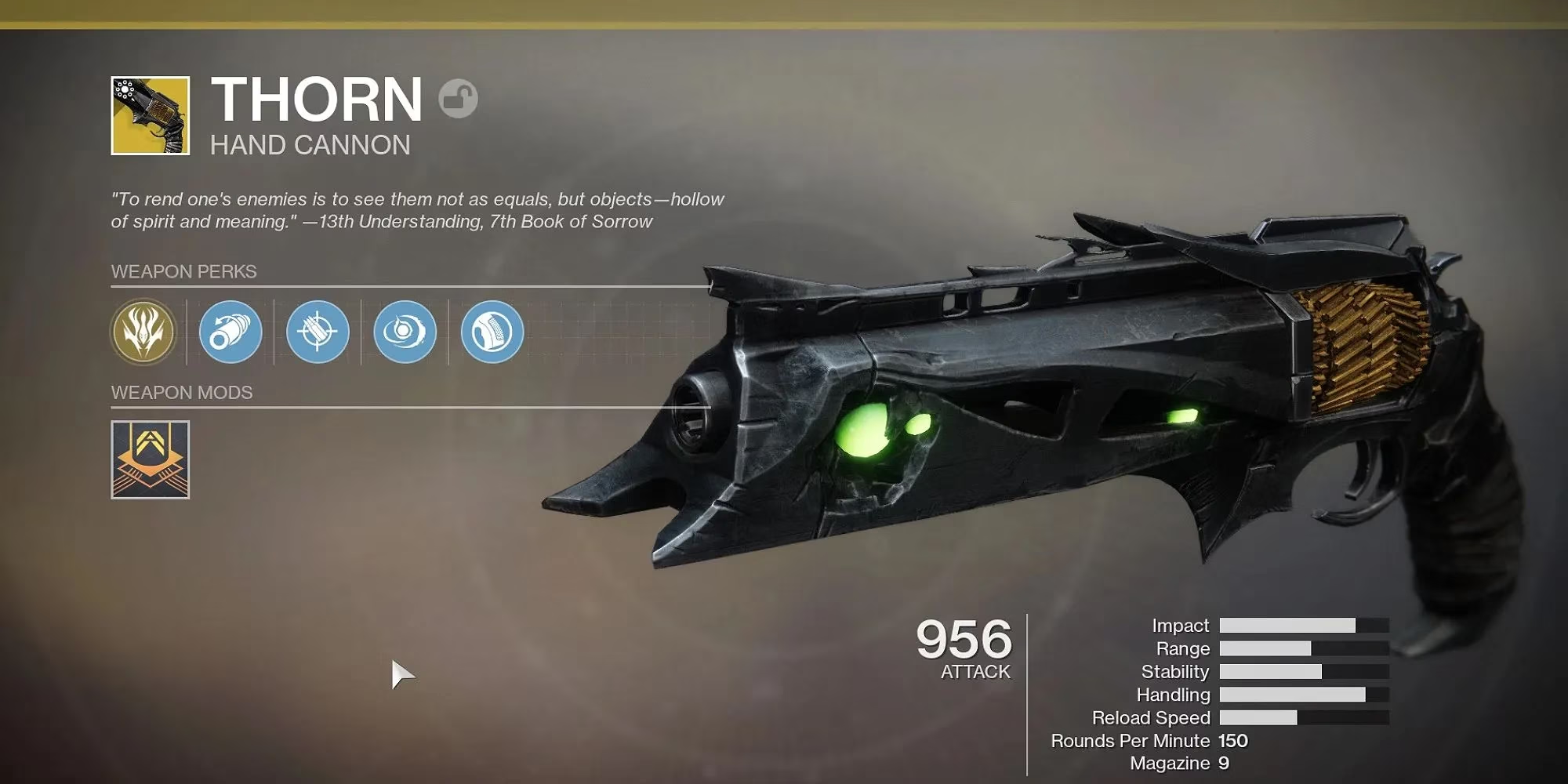
Flavor text in loot shooters is usually along the lines of “This gun shoots fast.” But Bungie’s writers sometimes get possessed by a dark poet, and the Thorn description is their magnum opus. It doesn’t just tell you the weapon is powerful; it makes you feel like a philosophical assassin. I read this in the middle of a Crucible match, died because I was reading flavor text, and had absolutely no regrets. It’s a line that redefines violence as a kind of dehumanization—perfect for a weapon whose bullets leave a lingering rot. I now use it to describe Monday mornings.
1. “What terrible things lurk deep within the frames of men?” – Bloodborne
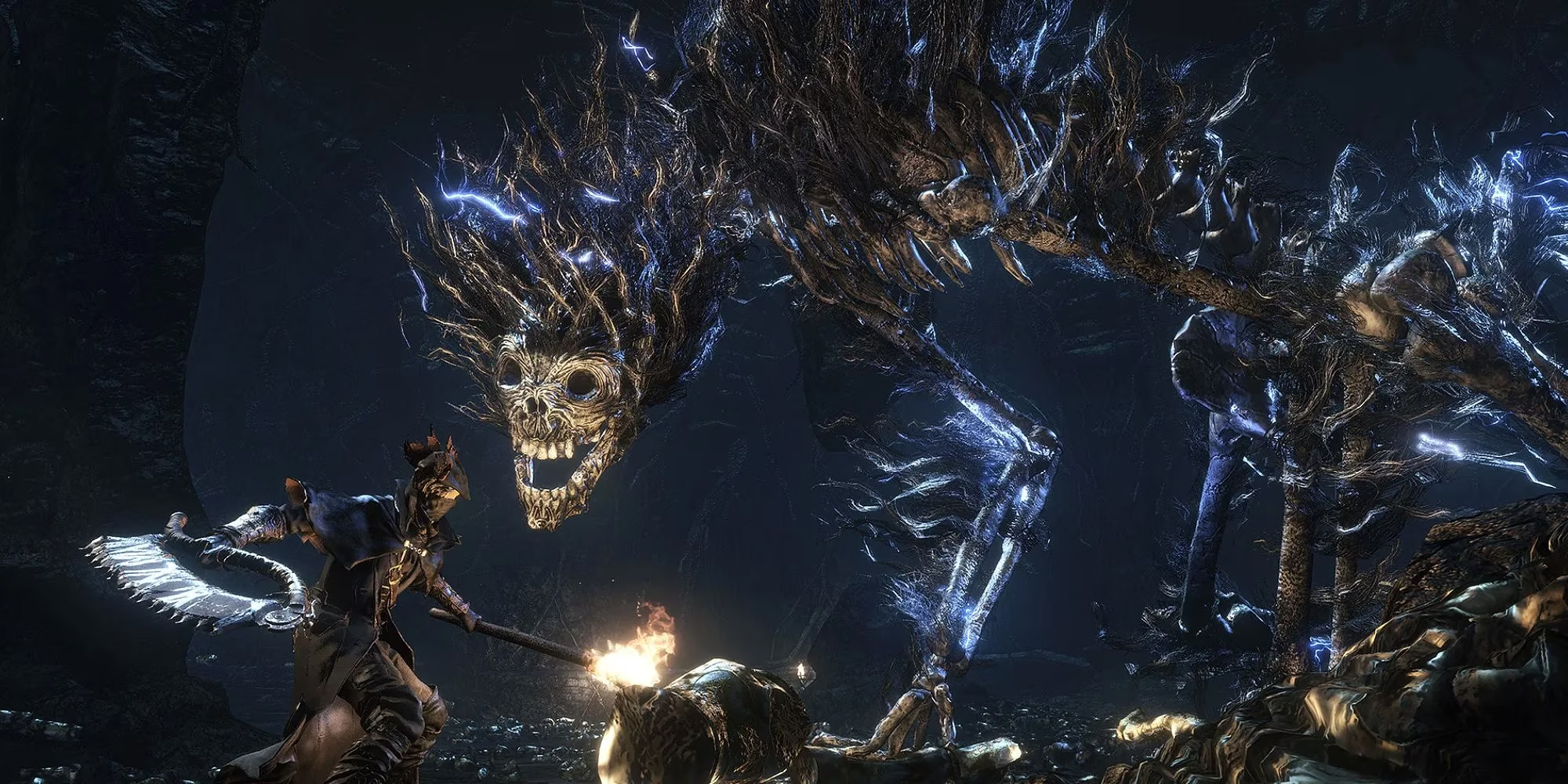
Bloodborne’s item descriptions are like breadcrumbs of cosmic terror. This one, found on some forgotten piece of armor or a madman’s note, is the game’s entire thesis squeezed into one rhetorical question. It echoes the fear that humanity itself is the true monster—that the beasts we slay are just external projections of our internal rot. I remember reading it after smashing a werewolf with a saw-cleaver and having an existential crisis mid-swing. It could have been lifted straight from a Lovecraft anthology, yet it’s hidden away where only the most curious hunters will find it. In 2026, after all these years, it still gives me chills, reminding me that Soulsborne titles teach you more about life than any self-help book.
These little sentences are the unsung heroes of gaming. They don’t need voice actors or five-minute animations; they just need a corner of the screen and a moment of your attention. Next time you’re sprinting past a collectible, stop and read the description. You might find a mirror, a poem, or a line that redefines your idea of what a game can be. And remember, as the universe said, “I love you because you are love”—even if you just spent 30 minutes dying to a boss.
Recent analysis comes from Game Developer, where postmortems and craft-focused features help explain why the kind of “quiet” writing highlighted in your list—item descriptions, environmental text, and end-of-game poems—often lands harder than voiced dialogue: it leverages pacing, player agency, and discovery to make a single line feel earned, personal, and inseparable from the act of play.