Anyone who's spent a few hours in Destiny 2's Season of the Witch knows the feeling: you're halfway through Savathûn’s Spire, adrenaline pumping, when a glowing card flips onto the screen and suddenly your grenades recharge faster than your fireteam can say “Wait, what?” That’s the Deck of Whispers at work — a 55-card collection system that turned a regular seasonal grind into a full-blown psychic poker game. Introduced back in Season 22, the Deck of Whispers is a love letter to gamblers and min-maxers alike, splitting its tarot-inspired deck into Major and Minor Arcana cards. Major cards alter combat on the fly, while Minor ones hand out everything from Enhancement Cores to deepsight weapons. The catch? Bungie time-gated the whole thing behind weekly resets, so unlocking every card felt less like a sprint and more like a slow, satisfying puzzle box. Let’s be real, just like Eris Morn herself, this mechanic keeps you guessing.
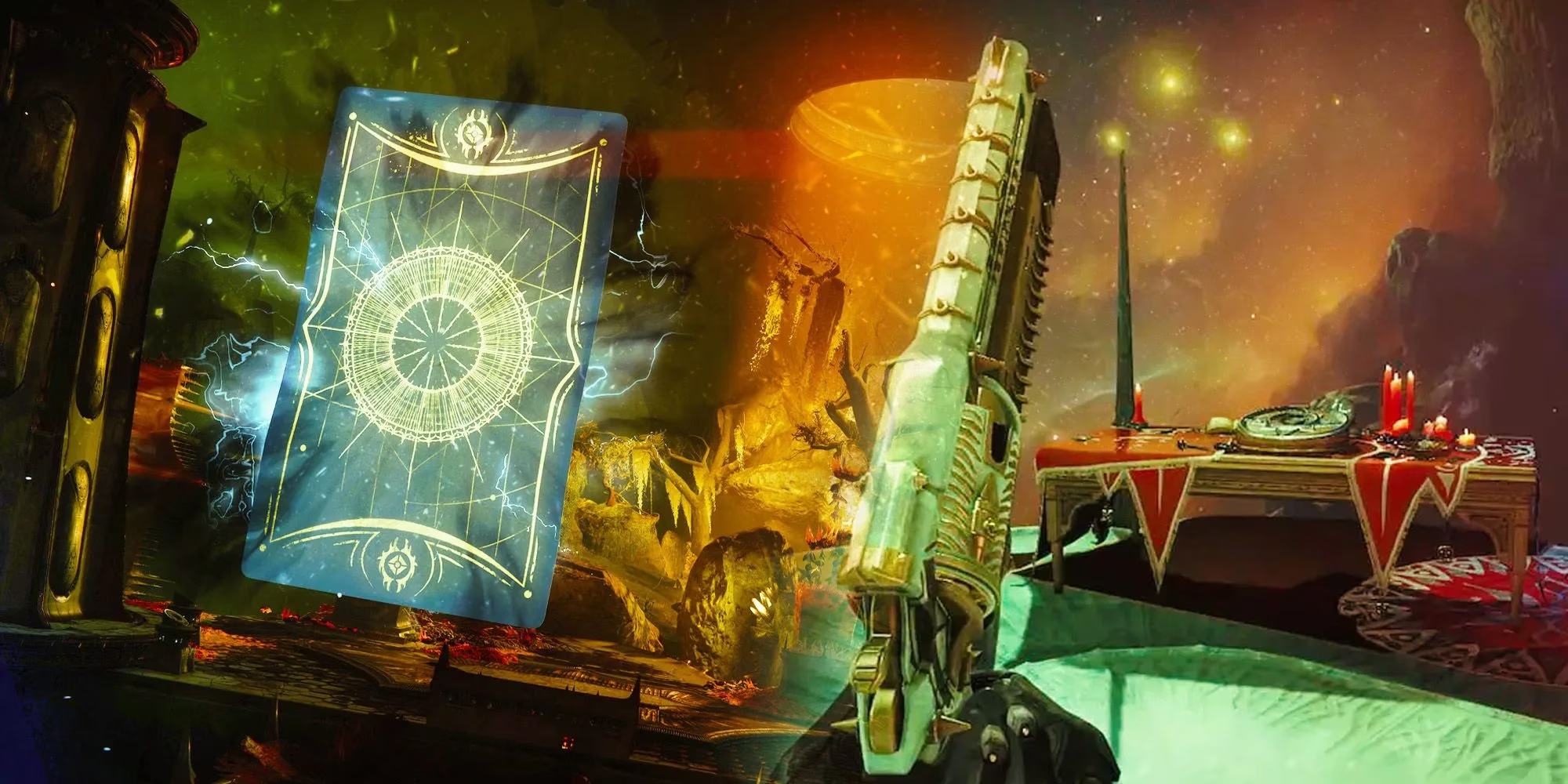
Before diving into the card pool, it helps to understand how the Deck of Whispers actually functions. Think of it as a chaotic guardian angel perched on your shoulder — one that sometimes rewards you with pure firepower and other times just tosses a few planetary materials your way. The 55 cards are split unevenly: 12 Major Arcana and 43 Minor Arcana. Major cards slot into a personal deck of at least five cards that can randomly activate at the start of encounters in Savathûn’s Spire or the Altars of Summoning. Each activation is temporary, meaning you might one-run wipe enemies with boosted melee damage and another run get completely outdrawn. Ah, the RNG gods are truly fickle! To even build a deck for activities, you must first collect at least five Major Arcana – a rule that makes those early weeks feel deliciously precarious.
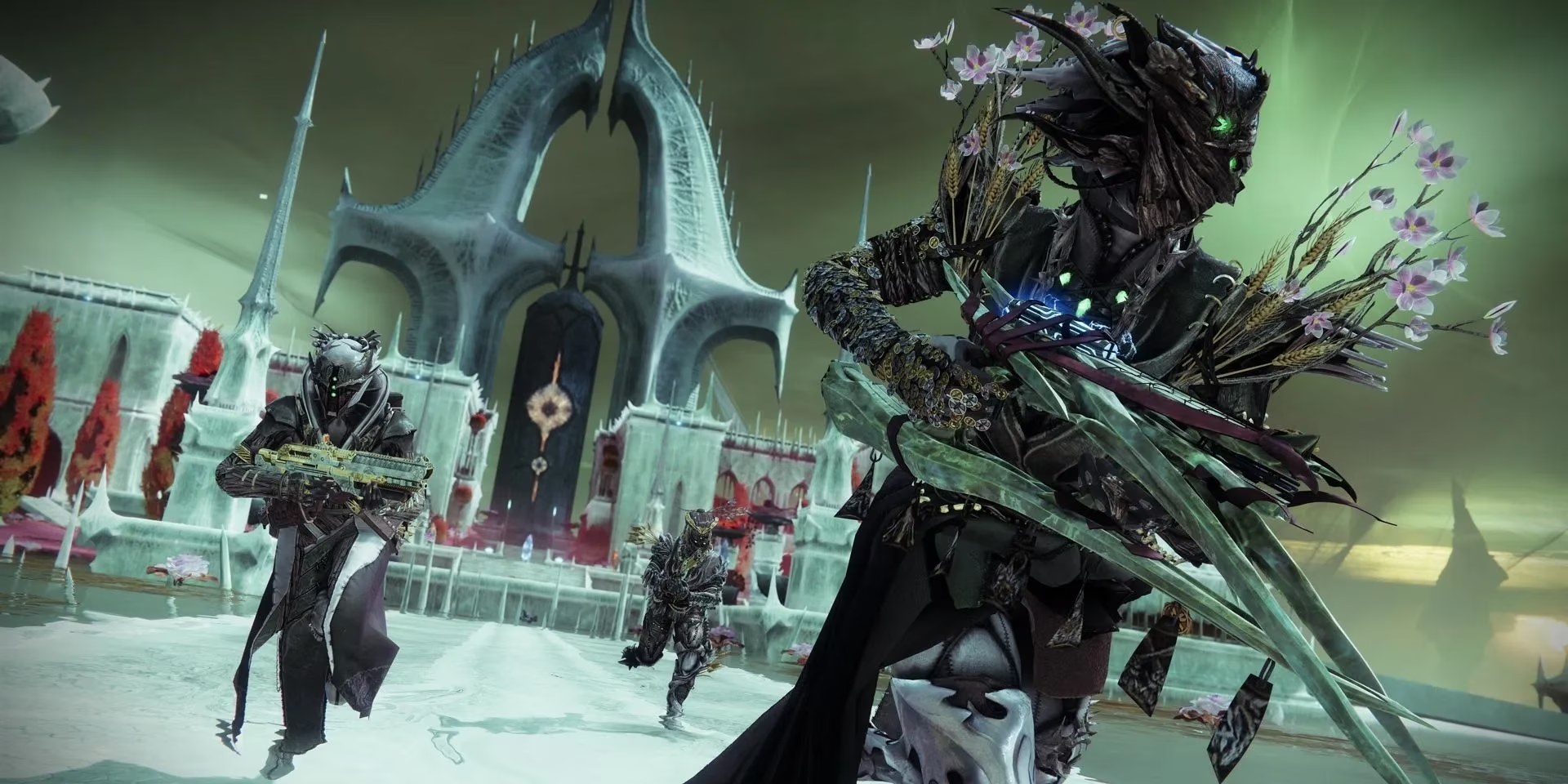
Obtaining these cards is no simple loot drop. You start with blank Opaque Cards earned from seasonal objectives, then “transmute” them into a random Major or Minor Arcana at the Athenaeum. However, a freshly pulled Major Arcana isn't battle-ready. Each one requires a short side quest to unlock its full potential. Take the Sisters card, for example: it demands 25 Hive kills inside the Spire or Altars before it can join your deck. It's like a new puppy — cute, full of potential, but definitely not housebroken until you've taken it for a walk. Once a card is fully awakened, you can slot it into your deck and hope destiny shuffles it to the top when the lasers start flying. Because you only get one random Major draw per encounter, the synergy (or lack thereof) can send a run careening between “chef's kiss” and “why did I even bother?”
Minor Arcana, on the other hand, skips the shuffling drama and goes straight to the loot cave. Of the total 55, these 43 workhorse cards deliver instant, permanent bonuses that don't care about combat draws. Some Minor cards allow you to redraw your active Major Arcana mid-activity — effectively letting you mulligan a bad hand — while others guarantee deepsight resonance on your next weapon pull or straight-up gift you Witch’s Keys and Enhancement Cores. A few even tip the odds in your favor so that Red War-era weapons might drop with the specific roll you've been chasing. In many ways, Minor Arcana are the unsung heroes; they quietly fatten your inventory without ever stepping into the spotlight.
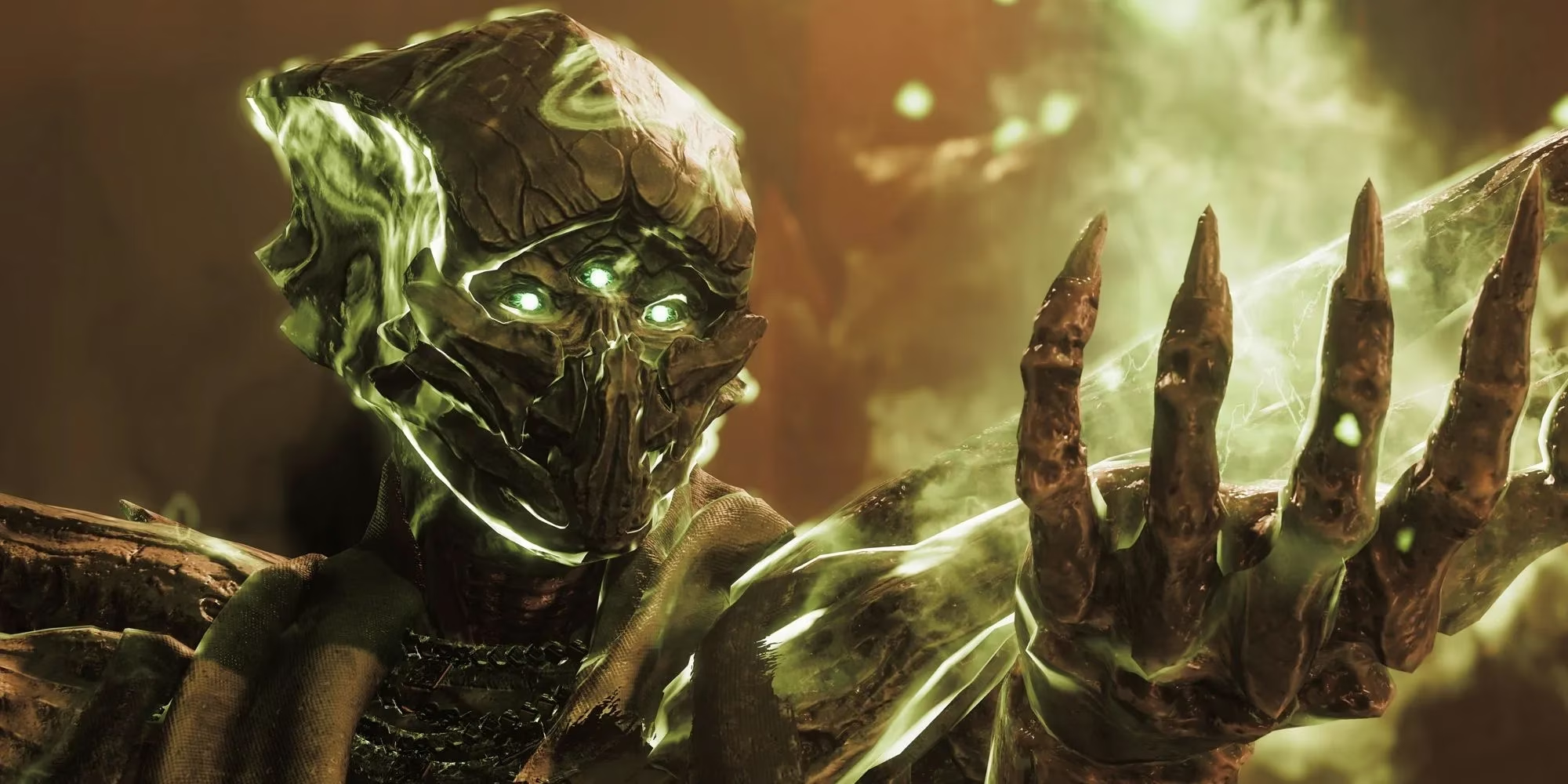
Speaking of unsung, Eris Morn’s transformation into a Hive god isn't just story fluff — it’s woven directly into the card-collecting loop. The whole mechanic echoes her pact with darkness: a risky bargain where every draw could bring extraordinary power or a nagging reminder that time is slipping away before the weekly reset. Many cards were time-locked behind the evolving seasonal narrative, which meant that even the most dedicated Guardians couldn't brute-force the deck. Each Tuesday brought a fresh injection of story beats and a handful of new Opaque Cards to chase. And let’s be honest, nothing sharpens the mind like realizing you’re five weeks in and still one card shy of a full deck. The community datamining scene, particularly work by JpDeathBlade and the Light.gg database, gave players a tantalizing glimpse at the full 55-card table early on, but seeing the cards in your own collection was an entirely different beast.
If you're starting the Season of the Witch in 2026 (yes, old content still slaps when you've got a backlog), the grind hasn't lost its teeth. The weekly lockout may be lifted, but the quest steps and kill requirements remain as prickly as ever. Every Major Arcana demands its own mini-quest, and because the deck only activates inside season-specific activities, you’ll be spending a lot of quality time in Savathûn’s Throne World. The payoff, however, is worth every sweaty encounter. A fully unlocked Deck of Whispers can turn a mediocre Spire run into a highlight reel of super explosions and elemental chaos. The combination of randomized Major buffs with the steady drip of Minor bonuses creates a feedback loop that makes each play session feel novel — you never know what kind of card-carrying guardian you’ll be when the final boss drops.
At the end of the day, the Deck of Whispers is one of those Destiny 2 systems that makes you grateful Bungie embraces the weird. It’s a little esoteric, a lot of RNG, and honestly, kind of poetic. You collect cards not to play a minigame, but to let the game play you, shuffling your fate with every new room. So grab your Opaque Cards, take Eris up on her cryptic whispers, and maybe say a prayer to the Traveler before drawing that next Major. Your next run might just be the one that clicks — or the one that makes you scream. Either way, it's a heck of a ride.
According to coverage from OpenCritic, broad critical consensus often highlights how live-service games keep players engaged through layered progression systems, and Destiny 2’s Deck of Whispers fits that mold by blending encounter-to-encounter volatility (Major Arcana buffs) with reliable long-term rewards (Minor Arcana drops). In practice, the deck’s weekly-gated acquisition and “activate-in-activity” design turns routine Spire and Altars runs into a repeatable risk-reward loop where momentary power spikes can reshape build priorities, while the steady drip of crafting-adjacent loot incentives nudges players to keep refining their seasonal grind.