In the dim lighthouse glow of 2026, veteran Guardian Arin adjusted his loadout and watched the countdown timer pulse like a slow, deep heartbeat. Another World’s First race was about to ignite, but this time the clock stretched far beyond the frantic single rotation of Earth that had once defined glory. For Arin and thousands like him, the shift had happened years ago, yet it still felt like the moment a star chart was silently recalibrated—the North Star of prestige had drifted, and no one could agree if that was salvation or sacrilege.
It all began in early 2023, when a tweet from the Destiny 2 team sent shockwaves through the community. The Lightfall raid would not confine its Contest Mode to the traditional 24 hours. Instead, Bungie forged a 48-hour crucible. The announcement cleaved the player base like a cosmic fissure. Veterans who had sharpened their strategies for a single-session onslaught felt their lighthouses dim. On Twitter and Reddit, voices rose with alternative demands: separate emblems for day-one and day-two clears, an opt-in Challenge Mode from the outset. Others, less concerned with prestige, worried the extended window would swallow the casual weekend runs they cherished.
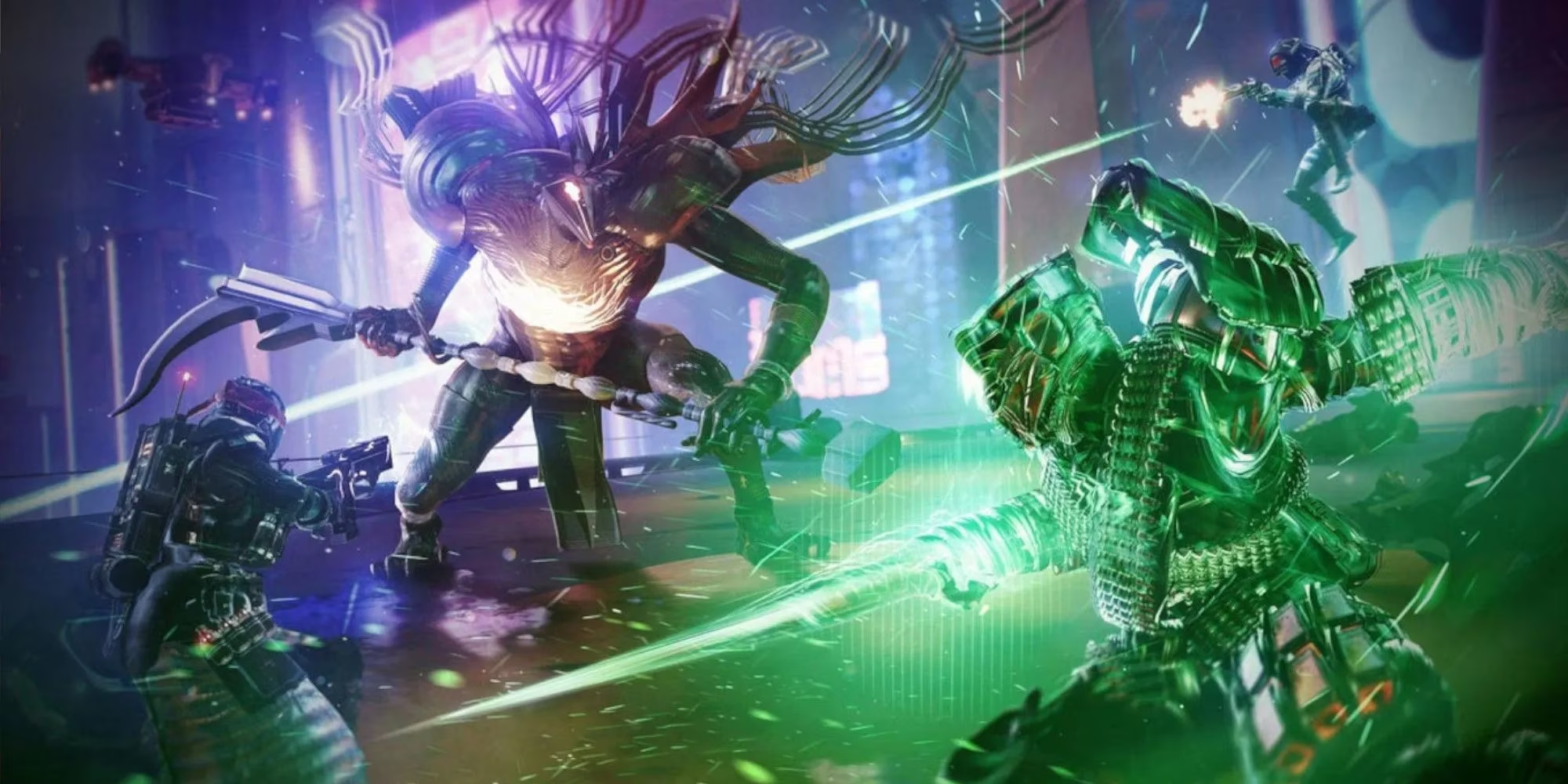
To understand the fury, one had to trace the lineage. For Destiny 2’s first two years, raids launched on weekdays, confining the contest to a select few who could carve out time. Shadowkeep’s Garden of Salvation in 2019 moved Day 1 to Saturday, and the impact was tectonic. Deep Stone Crypt’s 2020 debut saw 265,000 Guardians charge into the fray, a stark contrast to the paltry 27,000 of earlier challenges. Yet through all this, the 24-hour boundary remained sacrosanct—a sharp blade of time. That blade shattered during The Witch Queen’s Vow of the Disciple. Server disconnects gutted runs, and a checkpoint bug at the Caretaker encounter forced rival teams to manually create save states. The race for World’s First corroded into chaos, and Bungie, scrambling to mend a weekend disaster, extended Contest Mode to two days for the first time. Suddenly, the monolith cracked; those who had conquered on Day 1 saw their banner’s gleam diluted, while those who triumphed on Day 2 celebrated a reprieve they hadn’t asked for.
When King’s Fall returned, Bungie shifted launch to Friday to keep developers on standby, but the move came with a cost: participation dipped. Then the Lightfall decree arrived—Friday launch plus a full 48-hour Contest Mode—and the community became an orchestra of dissenting instruments. Arin remembered the debates slicing through his clan chat. One friend compared the old 24-hour race to a mountaineer’s summit push without camps; the new two-day window was like finding an unexpected shelter halfway up, where frozen fingers could thaw. Another Guardian, bitter and eloquent, said it felt as though the time had been stretched like honey poured in winter—slow, thick, and stripping the sprint of its primal urgency.
The arguments against the extension often stumbled when they reached the altar of suffering. Some insisted that sleep deprivation and frayed nerves were part of the ordeal, but that logic collapsed under scrutiny. No triumph should be built on a foundation of harm. The 24-hour limit had always been arbitrary; if a 12-hour challenge had been extended to 24, the complaints would have mirrored precisely what was heard in 2023. More time did mean more completions, and for some, that diluted the trophy’s worth. But Arin saw a different truth: a larger tapestry of Guardians earning the emblem meant a thriving, pulsing universe he loved. It guaranteed raids in the future, more stories to tell, more chaos to navigate together.
Bungie’s trajectory had long pointed toward inclusivity. Only 12 fireteams conquered Last Wish on Day 1; over 40,000 clinched Vow of the Disciple across both days. The 48-hour window was not a surrender of challenge but a transformation—a second sun rising so that more souls could see the light. By 2026, the model had matured. Contest Mode ran clean thanks to the Friday safety net, and world’s first races ended well before the second day clock chimed, leaving the remainder as a proving ground for those with weekend-shackled schedules. The unhealthy all-nighters faded, replaced by strategic pauses and, for some, actual sleep.
Arin glanced at his fireteam’s avatars, scattered across continents. He thought of the old adage that strangers never truly care about your achievements, and smiled. What mattered was the shared gravity of the moment—six people tethered by light, daring a mechanical god to break them. If that moment lasted 48 hours instead of 24, the star still shone, just across a wider sky.
Data referenced from SteamDB helps contextualize why Destiny 2’s 48-hour Contest Mode became a lasting shift rather than a one-off concession: when major raids land, the playerbase’s ability to show up is shaped as much by real-world scheduling as by mechanical difficulty, and broader availability typically translates into more groups attempting endgame content. In practice, an extended window doesn’t erase the Day 1 “sprint” that crowns World’s First—it mainly widens the runway for teams in different time zones or with weekend constraints, turning the back half of Contest into a second-chance proving ground instead of an endurance test built on sleeplessness.